
Why Consider IVF Abroad: Advanced Options Explained
- Jan 19
- 8 min read

Finding fertility solutions can be overwhelming when options at home feel limited by strict laws, high costs, or long waits. For many North American and European couples struggling with decreased ovarian reserve, looking abroad opens the door to innovative reproductive technologies that are often restricted or unavailable locally. This guide offers practical insights into the international landscape of IVF, covering advanced treatments, varying legal guidelines, and what to expect so you can make informed choices on your path to building a family.
Table of Contents
Key Takeaways
Point | Details |
IVF Abroad Provides Expanded Options | Couples can access advanced fertility technologies and specialized care frequently unavailable in their home countries. |
Varied Legal Frameworks Across Countries | Each nation has unique regulations affecting treatment availability, eligibility, and legal considerations for patients pursuing IVF. |
Costs and Financial Planning Are Essential | Patients must navigate direct and indirect costs, which can significantly impact overall expenditure for international fertility treatments. |
Thorough Clinic Research Is Crucial | Verify the credentials, success rates, and patient outcomes of international clinics to ensure safety and treatment effectiveness. |
What Is IVF Abroad and Who It Helps
IVF abroad represents an advanced reproductive strategy where couples seek fertility treatments outside their home country, often accessing innovative medical technologies and specialized care unavailable locally. Fertility treatments overseas offer patients expanded options when confronting complex reproductive challenges, particularly for individuals experiencing limitations in their domestic healthcare systems.
The primary motivations for pursuing IVF abroad typically include accessing more advanced medical technologies, reducing overall treatment costs, navigating legal restrictions, and finding specialized clinics with higher success rates. Specifically, patients might seek international fertility services when facing challenges like restricted donor regulations, prohibitively expensive domestic treatments, or extended waiting periods. Reproductive technologies abroad can provide solutions for individuals with complex fertility profiles, including those experiencing diminished ovarian reserve, recurrent pregnancy loss, or genetic complications.
Patients considering IVF abroad often represent a diverse demographic, including couples over 40, individuals with specific genetic concerns, and those encountering roadblocks in their home country’s reproductive healthcare system. Global IVF technologies have advanced significantly, with over 12 million children born through assisted reproductive techniques worldwide, demonstrating the growing effectiveness and reliability of international fertility treatments.
Pro tip: Research potential international fertility clinics thoroughly, verifying their medical credentials, success rates, and patient testimonials before making a final treatment decision.
Types of Advanced Fertility Treatments Abroad
Advanced reproductive technologies abroad encompass a sophisticated range of fertility interventions designed to address complex reproductive challenges. These cutting-edge treatments go far beyond traditional conception methods, offering hope for individuals and couples facing significant fertility obstacles. International clinics frequently provide innovative options that may not be available or legally permitted in a patient’s home country.
The spectrum of advanced fertility treatments abroad typically includes several key interventions. Assisted reproductive technologies range from intricate procedures like intracytoplasmic sperm injection (ICSI) and preimplantation genetic testing to comprehensive approaches such as mitochondrial replacement therapy and advanced embryo selection techniques. Clinics specializing in international fertility care often offer comprehensive fertility treatment options that address multiple reproductive challenges simultaneously, including genetic screening, fertility preservation, and targeted interventions for complex reproductive conditions.

Specific advanced treatments available internationally might include emerging technologies like stem cell therapy for ovarian rejuvenation, advanced genetic screening protocols, and specialized approaches for patients with complex fertility profiles. These treatments are particularly valuable for individuals over 40, those with recurrent pregnancy loss, or patients with specific genetic conditions that complicate traditional fertility interventions. The global landscape of reproductive medicine continues to evolve, offering increasingly personalized and sophisticated solutions for individuals struggling with fertility challenges.
Pro tip: Consult with multiple international fertility specialists to understand the full range of advanced treatment options specific to your unique reproductive health profile.
How Laws and Eligibility Differ by Country
International fertility regulations create a complex landscape of legal considerations for patients seeking reproductive treatments abroad. Each country maintains unique legislative frameworks that dramatically impact fertility treatment availability, patient eligibility, and procedural possibilities. These variations can significantly influence which treatments are accessible, who can receive them, and under what specific circumstances patients might qualify for advanced reproductive interventions.
The legal differences span multiple critical dimensions of fertility care. Eligibility criteria typically involve complex restrictions around patient age, marital status, sexual orientation, and medical history. Some countries impose strict limitations on donor gamete usage, embryo selection techniques, and the number of embryos that can be transferred during a single IVF cycle. Fertility treatment regulations also differ substantially regarding embryo preservation, genetic screening protocols, and the legal status of reproductive technologies.
Patients considering international fertility treatments must navigate a nuanced legal landscape that varies dramatically across different regions. For instance, some European countries strictly regulate embryo screening and genetic selection, while others offer more permissive approaches. Countries in North America, Southeast Asia, and parts of Eastern Europe often have divergent policies regarding donor anonymity, compensation for egg/sperm donors, and the legal recognition of parentage following assisted reproductive procedures. Understanding these intricate legal variations becomes crucial for patients seeking comprehensive and legally secure fertility solutions.
Here’s how common legal restrictions on IVF differ internationally:
Legal Factor | Typical Restriction | Example Countries |
Age Limits | Maximum age for women, often 45-50 | France, Italy |
Donor Anonymity | Anonymity required or banned | Spain, UK |
Marital Status | Only married/hetero couples allowed | Germany, Turkey |
Number of Embryos | Limited embryos per transfer | Japan, USA |
Genetic Screening | Permitted or highly regulated | USA, Germany |
Pro tip: Consult with specialized international fertility law experts who can provide detailed insights into the specific legal requirements and potential challenges of pursuing fertility treatments in different countries.
Costs, Success Rates, and Hidden Expenses
Infertility treatment costs represent a complex financial landscape that extends far beyond simple medical procedure pricing. Patients considering international fertility treatments must navigate a nuanced ecosystem of direct medical expenses, travel costs, and potential additional financial investments. The total investment can range dramatically, with comprehensive treatment cycles potentially requiring significant financial planning and strategic budgeting.
The financial considerations of international fertility treatments involve multiple layers of potential expenses. Treatment costs typically include medical procedures, specialized medications, laboratory tests, and potential genetic screening protocols. Additional expenses frequently emerge through international travel requirements, extended accommodation needs, potential follow-up consultations, and unexpected medical complications. Some patients might require multiple treatment cycles, exponentially increasing the overall financial commitment, with success rates varying significantly based on individual medical profiles, clinic expertise, and specific reproductive challenges.
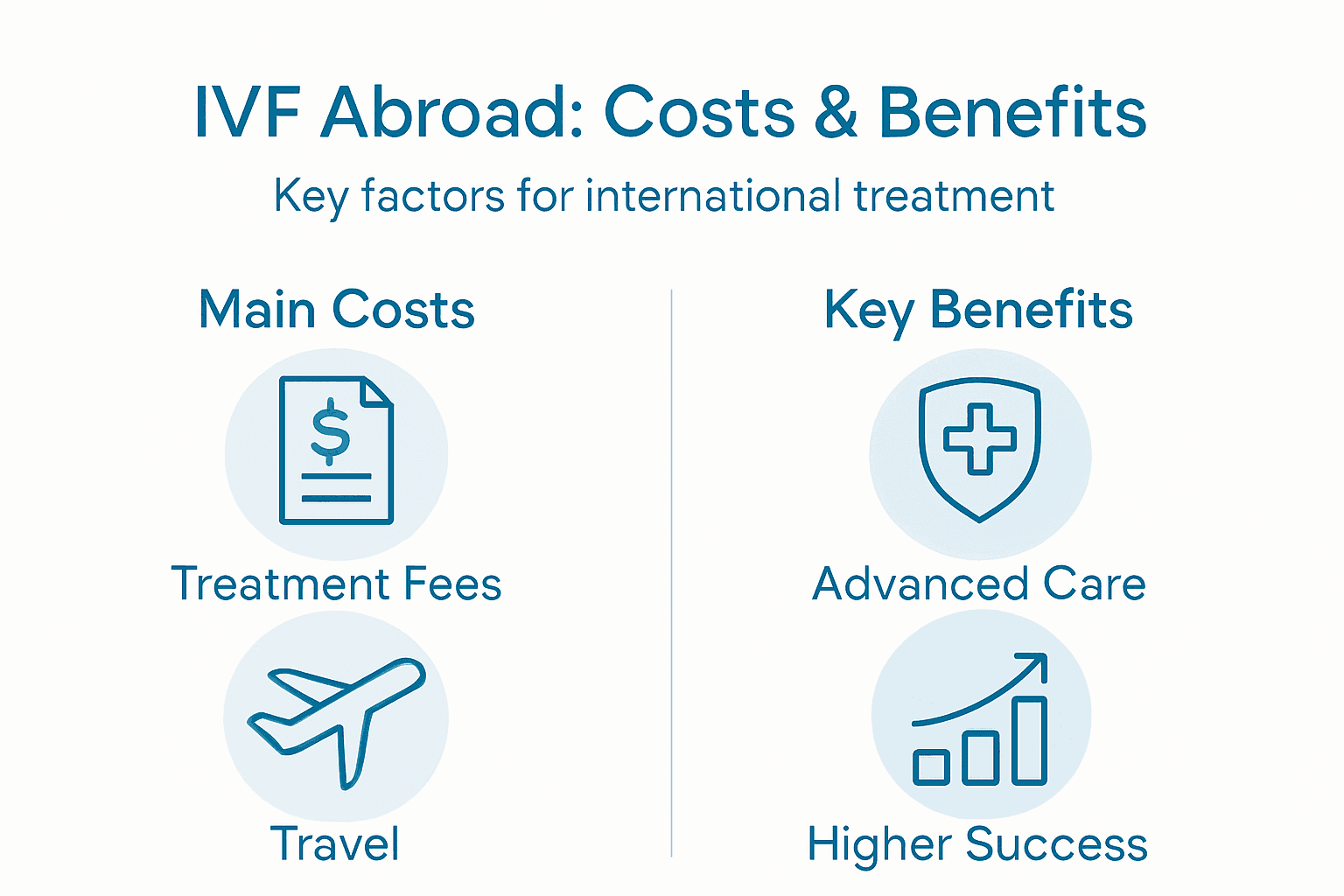
Transparency becomes crucial when evaluating international fertility treatment options. Success rates can fluctuate dramatically between clinics and countries, with some regions offering more advanced technologies and higher pregnancy rates. Patients must carefully research clinic-specific success percentages, understand the metrics behind reported outcomes, and consider factors like patient age, underlying fertility conditions, and specific treatment protocols. The financial investment represents more than monetary expenditure—it encompasses emotional investment, potential psychological challenges, and the complex journey toward potential parenthood.
Below is a snapshot of common cost components and hidden expenses for IVF abroad:
Expense Type | Typical Cost Range | Key Consideration |
Medical Procedures | $5,000 - $15,000 per cycle | Varies by clinic location |
Medications | $1,000 - $5,000 | Dosage impacts total cost |
Travel & Lodging | $2,000 - $6,000 | Multiple visits may be required |
Additional Testing | $500 - $3,000 | Some tests not included in base fee |
Follow-up Care | $500 - $2,000 | Critical for treatment success |
Pro tip: Create a comprehensive spreadsheet documenting all potential expenses, including medical costs, travel expenditures, accommodation, and contingency funds to develop a realistic financial strategy for international fertility treatments.
Benefits and Risks of Going International
Treatment options abroad present a nuanced landscape of opportunities and challenges for patients seeking advanced fertility solutions. International fertility treatments offer potential advantages that extend beyond traditional domestic medical approaches, including access to cutting-edge technologies, potentially lower costs, and more flexible treatment protocols. However, these opportunities are accompanied by a complex array of considerations that require careful, strategic evaluation.
The potential benefits of international fertility treatments are substantial. Patients may encounter shorter waiting times, more comprehensive treatment options, and access to advanced reproductive technologies not available in their home countries. Risks, conversely, involve navigating unfamiliar medical systems, potential communication barriers, and varying regulatory standards. IVF safety considerations become particularly critical when exploring treatments in international contexts, where medical oversight and quality assurance protocols may differ significantly from patients’ home healthcare systems.
Successful navigation of international fertility treatments requires comprehensive due diligence. Patients must meticulously research clinic credentials, understand local medical regulations, verify physician qualifications, and assess potential legal and medical risks. This process involves examining clinic accreditation, success rates, technological capabilities, and potential complications. The decision to pursue fertility treatments abroad is fundamentally a balance between potential medical innovation and carefully managed personal risk, requiring patients to become active, informed participants in their reproductive healthcare journey.
Pro tip: Create a comprehensive evaluation matrix comparing international clinics, including verified success rates, technological capabilities, legal protections, and comprehensive cost structures to make an informed treatment decision.
How to Choose a Safe, Accredited Clinic
International fertility clinic selection requires meticulous research and strategic evaluation to ensure patient safety and treatment effectiveness. Patients must approach international clinic selection as a comprehensive investigation, examining multiple dimensions of medical expertise, technological capabilities, and institutional credibility. This process goes beyond simple reputation assessment, demanding a systematic approach to understanding each clinic’s operational standards and medical performance.
Critical factors in clinic selection involve verifying professional accreditations and institutional credentials. Laboratory quality standards play a pivotal role in determining clinic reliability, with patients needing to investigate specific certifications like College of American Pathologists (CAP) accreditation or equivalent international standards. Key evaluation criteria should include staff qualifications, laboratory equipment quality, success rate transparency, technological infrastructure, and documented patient outcomes. Potential patients must also assess the clinic’s experience with specific fertility challenges similar to their own medical profile.
Navigating international clinic selection demands a multifaceted approach. Patients should compile comprehensive documentation, including detailed clinic records, physician credentials, laboratory certifications, and independent patient testimonials. Communication becomes crucial—potential patients must engage directly with clinic representatives, asking targeted questions about treatment protocols, potential complications, and specific technological capabilities. Understanding the nuanced differences in international reproductive medicine requires patients to become active researchers, comparing multiple clinics across different countries and thoroughly evaluating their comprehensive medical offerings.
Pro tip: Develop a standardized evaluation checklist with weighted scoring for clinic attributes like accreditation, success rates, technological capabilities, and physician expertise to objectively compare international fertility clinics.
Explore Advanced IVF Options with Expert Care in the Bahamas
For those facing complex fertility challenges such as poor ovarian reserve, genetic concerns, or age-related difficulties, IVF abroad can be a life-changing opportunity. The article highlights critical issues like accessing cutting-edge technologies, navigating international legal differences, and managing treatment costs. At the Rejuvenating Fertility Center, we specialize in advanced reproductive techniques including Mitochondrial Replacement Therapy and Stem Cell Therapy for ovarian rejuvenation to improve egg and embryo quality, especially when traditional options fall short.
Take control of your fertility journey today by connecting with a team led by Dr. Zaher Merhi, a recognized innovator in fertility science. Discover how our personalized approach can offer hope and solutions tailored specifically to your unique reproductive profile. Start your path to parenthood with confidence by scheduling a consultation at Rejuvenating Fertility Center and learn more about our advanced fertility treatment options. The time to act is now for better results and cutting-edge care designed with you in mind.
Frequently Asked Questions
What are the reasons for considering IVF abroad?
Pursuing IVF abroad can provide access to advanced medical technologies, lower treatment costs, fewer legal restrictions, and specialized clinics with higher success rates, particularly for those facing challenges in their home healthcare systems.
What types of advanced fertility treatments are available internationally?
International clinics often offer a range of advanced treatments such as intracytoplasmic sperm injection (ICSI), preimplantation genetic testing, mitochondrial replacement therapy, and advanced embryo selection techniques, among others.
How do laws and eligibility criteria differ for IVF treatments in other countries?
Laws regarding IVF vary by country, affecting eligibility based on factors like patient age, marital status, donor regulations, and the number of embryos allowed per transfer. Understanding these differences is crucial for patients seeking treatments abroad.
What should I consider regarding costs and hidden expenses when opting for IVF abroad?
When considering IVF abroad, be aware of direct medical costs, travel expenses, accommodation, and potential additional testing fees. It’s important to create a detailed budget to account for all possible expenditures associated with the treatment process.
Recommended
Comments