
Why Choose IVF in 2026: Innovations for Women Over 40

Finding answers after years of trying can feel overwhelming, especially when diminished ovarian reserve adds another layer of complexity to fertility hopes. For women over 40, access to innovative IVF options means exploring new possibilities and gaining control over family planning decisions. With breakthroughs like AI-driven embryo selection and advanced genetic screening, the leading clinics in the Bahamas are redefining what’s possible for women seeking highly personalized treatments and real hope for building a family.
Table of Contents
Key Takeaways
Point | Details |
Modern IVF Techniques | IVF has evolved into a sophisticated reproductive technology combining genetic screening, advanced embryo selection, and personalized treatment protocols, especially beneficial for women over 40. |
Addressing Myths and Realities | IVF does not automatically guarantee pregnancy or multiple births; success rates depend on various factors including age and health. |
Technological Innovations | AI-driven embryo selection and advanced cryopreservation enhance success rates and offer more personalized treatment options. |
Navigating Costs and Legalities | Women seeking IVF should understand the varying costs and legal frameworks internationally to make informed decisions about treatment options. |
Understanding IVF in 2026: Definitions and Myths
In vitro fertilization (IVF) represents a groundbreaking reproductive technology that has transformed fertility options for women over 40. As medical science advances, IVF is no longer just a last-resort treatment but a sophisticated approach to family planning and genetic screening. Comprehensive research on fertility treatments reveals that modern IVF goes far beyond traditional conception methods.
The fundamental definition of IVF involves fertilizing an egg with sperm outside the body in a specialized laboratory environment. Unlike traditional reproductive methods, this process allows medical professionals to select and prepare the most viable embryos before potential implantation. Key aspects of contemporary IVF include:
Genetic screening to identify potential chromosomal abnormalities
Advanced embryo selection techniques for improved success rates
Mitochondrial health assessment to evaluate embryo quality
Personalized treatment protocols tailored to individual patient needs
Numerous myths continue to surround IVF, creating unnecessary anxiety for potential patients. Detailed fertility research highlights several critical misconceptions. For instance, contrary to popular belief, IVF does not automatically result in multiple births, nor does it guarantee pregnancy. Success rates depend on multiple factors including age, overall health, and specific medical protocols.
IVF is a complex medical procedure requiring individualized approach and realistic expectations, not a guaranteed solution.
Modern IVF techniques have significantly evolved, offering women over 40 unprecedented reproductive opportunities. The technology now incorporates advanced genetic testing, allows for precise embryo selection, and provides more comprehensive fertility assessment than ever before.
Pro tip: Research multiple fertility clinics, understand their specific technologies, and request detailed consultation about personalized success probabilities.
Breakthrough IVF Technologies and Innovations
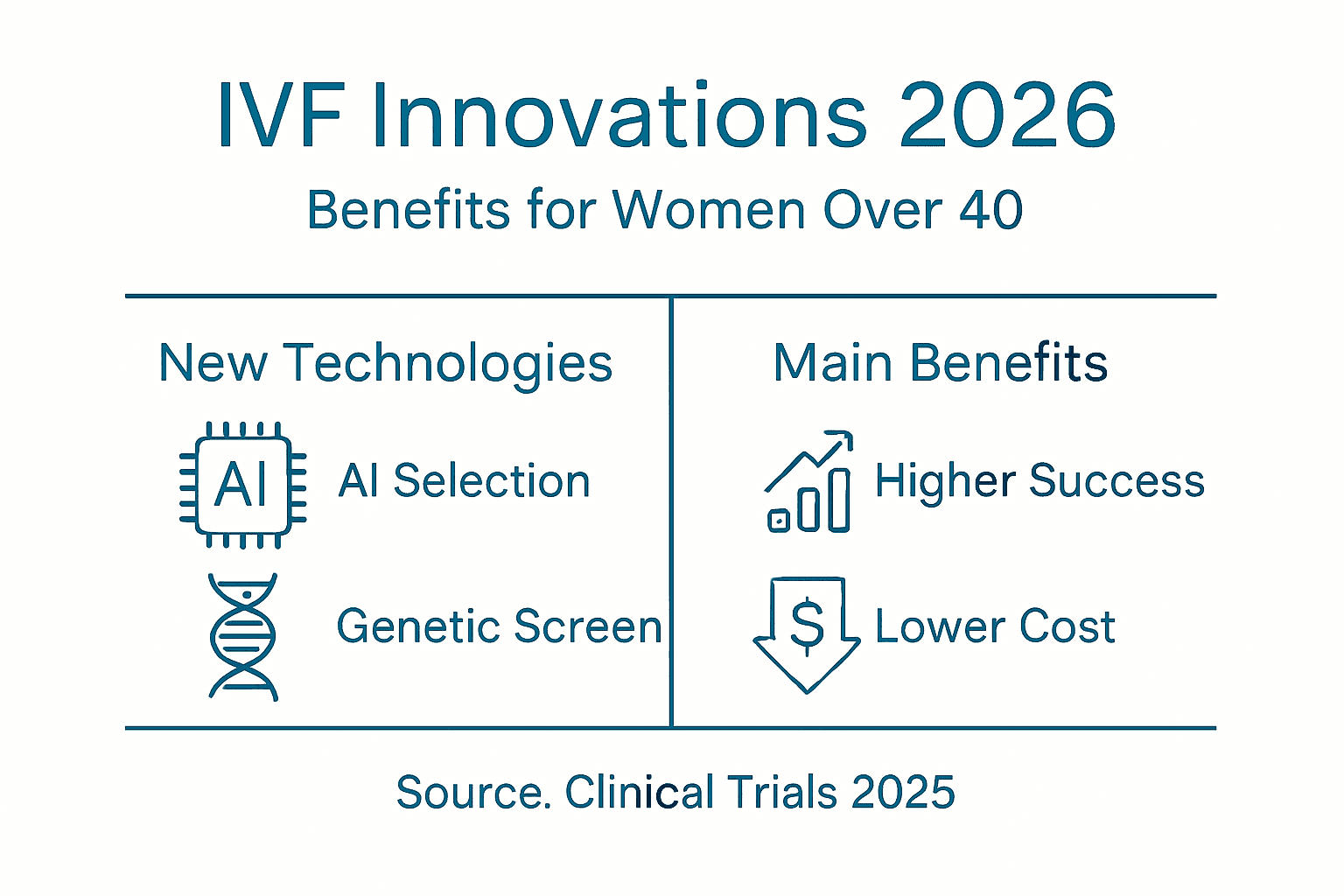
The landscape of reproductive medicine is undergoing a remarkable transformation, with groundbreaking technologies reshaping fertility options for women over 40. Advanced AI-driven embryo selection techniques are revolutionizing the way medical professionals approach in vitro fertilization, offering unprecedented precision and improved success rates.
Key technological innovations in 2026 include:
Artificial Intelligence (AI) embryo selection algorithms
Advanced genetic screening capabilities
Time-lapse imaging for continuous embryo monitoring
Personalized ovarian stimulation protocols
Improved cryopreservation techniques
These innovations address multiple challenges faced by women seeking fertility treatments. The integration of artificial intelligence allows for more nuanced embryo selection by analyzing complex growth patterns and developmental characteristics. This approach significantly increases the probability of successful embryo implantation, particularly for women over 40 who typically face more complex fertility challenges.
Modern reproductive technologies are transforming fertility treatments from a one-size-fits-all approach to highly personalized medical interventions.
Emerging assisted reproduction methods are also focusing on making IVF more accessible and cost-effective. Simplified IVF systems combined with mild ovarian stimulation protocols demonstrate promising results, potentially expanding global access to fertility treatments and addressing existing socioeconomic disparities in reproductive healthcare.

Below is a summary of breakthrough IVF technologies driving success in 2026:
Innovation | Main Benefit | Impact for Women Over 40 |
AI-driven embryo selection | Increased accuracy in embryo choice | Higher pregnancy probability |
Advanced genetic screening | Identification of genetic disorders | Reduced risk of abnormalities |
Improved cryopreservation | Better embryo survival rates | Flexible scheduling for cycles |
Pro tip: Consult with fertility specialists who specialize in cutting-edge technologies and can provide personalized treatment strategies tailored to your specific reproductive health profile.
Personalized Treatment for Poor Ovarian Reserve
Women with poor ovarian reserve face unique challenges in fertility treatment, requiring sophisticated and tailored medical approaches. Innovative platelet-rich plasma (PRP) interventions represent a promising frontier in addressing diminished ovarian function, offering potential strategies to improve reproductive outcomes for women over 40.
Key personalized treatment strategies for poor ovarian reserve include:
Comprehensive genetic screening
Individualized hormonal assessment
Advanced reproductive technologies
Targeted ovarian stimulation protocols
Mitochondrial health evaluation
The complexity of poor ovarian reserve demands a multifaceted approach. Each patient requires a unique treatment plan that considers her specific physiological characteristics, genetic profile, and reproductive history. Modern reproductive medicine increasingly recognizes that standardized protocols are insufficient for women experiencing significant fertility challenges.
Personalized medicine transforms fertility treatment from a generic approach to a precisely targeted intervention.
Recent clinical research challenges traditional assumptions about embryo transfer strategies, revealing that treatment must be carefully customized. For women with diminished ovarian reserve, this means developing nuanced protocols that maximize the potential for successful pregnancy while minimizing unnecessary medical interventions.
Pro tip: Request a comprehensive fertility assessment that includes detailed genetic, hormonal, and metabolic screening to develop the most effective personalized treatment strategy.
Cost, Access, and Legal Considerations Worldwide
Navigating the complex landscape of international fertility treatments requires a comprehensive understanding of the legal and financial challenges that women over 40 may encounter. International IVF legal considerations reveal a complex web of regulations that significantly impact fertility tourism and cross-border reproductive care.
Key global considerations for IVF treatment include:
Varying national legal frameworks
Cost differences between countries
Donor gamete regulations
Surrogacy legal restrictions
Embryo storage and transfer policies
Insurance coverage limitations
The financial landscape of IVF treatment presents significant barriers for many women. Treatment costs can range dramatically across different countries, with some destinations offering more affordable options while maintaining high medical standards. Factors such as local healthcare policies, technological infrastructure, and regulatory environments play crucial roles in determining both accessibility and overall treatment expenses.
International fertility care requires careful navigation of legal, ethical, and financial landscapes.
Understanding the legal nuances of reproductive technologies is crucial. Different countries have dramatically different approaches to assisted reproduction, with some nations having strict regulations that limit certain procedures, while others offer more progressive and flexible frameworks. These variations can significantly impact treatment options, success rates, and legal parental rights.
Pro tip: Consult with international fertility law experts and conduct comprehensive research on legal and financial requirements before committing to cross-border reproductive treatments.
Comparing IVF to Other Fertility Options
Navigating fertility treatments requires understanding the nuanced differences between various reproductive technologies. Comprehensive fertility treatment comparisons reveal critical distinctions in success rates, invasiveness, and potential outcomes for women over 40 seeking to expand their families.
Key fertility treatment options include:
In Vitro Fertilization (IVF)
Highest success rates
Most technologically advanced
Suitable for complex fertility challenges
Intrauterine Insemination (IUI)
Less invasive
Lower cost
Best for mild fertility issues
Fertility Medications
Hormonal stimulation
Non-invasive approach
Limited success for advanced maternal age
For women over 40, IVF typically offers the most promising outcomes. Advanced fertility treatment insights demonstrate that while alternative methods exist, IVF provides the most sophisticated approach to addressing complex reproductive challenges.
Here’s how IVF compares to other fertility treatments for women over 40:
Treatment Type | Success Rate (Age 40+) | Invasiveness | Key Advantage |
IVF | Highest | Most invasive | Addresses complex challenges |
IUI | Lower | Minimally invasive | Affordable, simple procedure |
Fertility Medications | Limited | Non-invasive | Least risk, easy to start |
Not all fertility treatments are created equal, and individual medical history determines optimal strategies.
The selection of a fertility treatment depends on multiple factors, including age, underlying medical conditions, previous reproductive history, and financial resources. Women over 40 often require more advanced interventions due to diminished ovarian reserve and increased genetic complexity.
Pro tip: Consult a reproductive endocrinology specialist who can provide a personalized assessment of which fertility treatment matches your specific medical profile and reproductive goals.
Managing Risks and Navigating Success Rates
Comprehensive reproductive health research reveals the critical importance of understanding potential risks and realistic success rates for women over 40 considering IVF treatments. Advanced medical technologies have significantly improved outcomes, but navigating these complex medical decisions requires nuanced understanding and careful professional guidance.
Key risk management strategies include:
Comprehensive medical screening
Genetic compatibility testing
Detailed health history assessment
Age-specific treatment protocols
Ongoing medical monitoring
Psychological support services
Success rates for women over 40 vary significantly based on multiple factors, including overall health, genetic profile, and specific reproductive challenges. While technological advances have expanded possibilities, realistic expectations remain crucial for emotional and medical preparation.
Individual medical complexity determines reproductive potential, not age alone.
Modern reproductive medicine emphasizes personalized risk assessment, moving beyond generic statistical models. Each patient represents a unique combination of physiological factors that require tailored approaches, precise medical interventions, and comprehensive support systems.
Pro tip: Request a comprehensive fertility risk assessment that includes detailed genetic screening, metabolic evaluation, and personalized success probability analysis.
Discover Advanced IVF Solutions Designed Especially for Women Over 40
If you are facing the challenges of diminished ovarian reserve or seeking personalized IVF treatments with the latest innovations described in “Why Choose IVF in 2026: Innovations for Women Over 40” this is your opportunity to access cutting-edge reproductive medicine. Addressing complex issues like genetic screening and mitochondrial health is critical for success at this stage of life. At Rejuvenating Fertility Center in the Bahamas you benefit from therapies such as Mitochondrial Replacement Therapy and Stem Cell Therapy specifically designed to improve egg and embryo quality for women over 40.
Take control of your fertility journey with a center led by Dr. Zaher Merhi, a pioneer in personalized IVF care delivering scientifically proven results. Don’t let myths or uncertainty hold you back. Explore our advanced fertility treatments and learn how our tailored approaches can optimize your chances today. Connect with us now to schedule a consultation and discover why thousands worldwide trust Rejuvenating Fertility Center for hope and real results.
Frequently Asked Questions
What is IVF and how does it work for women over 40?
In vitro fertilization (IVF) involves fertilizing an egg with sperm in a laboratory setting. For women over 40, IVF allows for careful selection of viable embryos, genetic screening for abnormalities, and personalized treatment protocols to maximize success rates.
What innovations in IVF technology are available in 2026?
In 2026, IVF technologies have evolved with AI-driven embryo selection, advanced genetic screening, time-lapse imaging, and improved cryopreservation techniques, all aimed at enhancing the chances of successful pregnancies for women over 40.
How does poor ovarian reserve impact IVF success rates for older women?
Poor ovarian reserve can pose challenges in IVF, but personalized treatment strategies, including comprehensive assessments and targeted hormonal protocols, can be implemented to improve outcomes for women over 40 facing diminished ovarian function.
Are there any financial considerations to keep in mind when choosing IVF?
Yes, the costs of IVF can vary significantly and may include expenses related to procedures, medications, and potential donor services. It’s important to understand the financial landscape of IVF, including insurance coverage and payment options, to make informed decisions.
Recommended
The use of AI for embryo selection is an interesting example of how algorithms are becoming part of modern healthcare. It also raises broader questions about how imaging data, biological markers, and clinical expertise can work together to support medical decision-making.