
Fertility Science: Transforming Options for Women Over 40

When you have spent years hoping for answers, seeing new eggs on the ultrasound screen can feel like a miracle. Modern fertility science now offers more than reassurance—it provides precise, innovative treatments for women over 40, no matter where you live. As global research pushes boundaries, options like mitochondrial replacement therapy and stem cell ovarian rejuvenation bring hope to those facing diminished ovarian reserve. Discover how these evidence-based solutions support women with complex fertility challenges in ways previous generations never imagined.
Table of Contents
Key Takeaways
Point | Details |
Fertility Science Advances | Fertility science combines laboratory innovation with reproductive biology to provide evidence-based solutions for infertility, particularly benefiting women over 40. |
Diverse Treatment Options | Advanced treatments like IVF, mitochondrial replacement therapy, and stem cell therapy allow tailored approaches for aging women facing infertility challenges. |
Importance of Diagnostics | Comprehensive diagnostic evaluations are crucial for identifying specific fertility issues, enabling more effective and personalized treatment plans. |
Regulatory and Ethical Considerations | Understanding the legal and ethical landscape around advanced fertility treatments is essential for informed decision-making and patient safety. |
Defining Fertility Science and Its Promise
Fertility science represents a convergence of laboratory innovation, clinical expertise, and reproductive biology aimed squarely at solving one of life’s most pressing challenges: infertility. For women over 40, this field offers something that previous generations simply did not have: evidence-based solutions grounded in decades of research and refined through millions of clinical applications worldwide. At its core, fertility science combines detailed understanding of reproductive physiology with cutting-edge technologies to diagnose and treat infertility, creating pathways to pregnancy that would have seemed impossible just 10 or 15 years ago.
The American Society for Reproductive Medicine formally defines infertility as the inability to achieve pregnancy after regular unprotected intercourse for a specified duration, typically 12 months for women under 35 and 6 months for women over 35. But this clinical definition barely scratches the surface of what fertility science actually encompasses. The field studies reproductive health across every dimension: how eggs develop and mature, why embryos succeed or fail, how hormonal systems regulate fertility, and how aging affects ovarian reserve. This foundational knowledge translates directly into treatments. When a woman over 40 struggles to conceive naturally, fertility science provides specific diagnostic tools to identify whether the problem stems from egg quality, quantity, chromosomal issues, or other factors. Once identified, targeted interventions can address these specific challenges rather than applying a one-size-fits-all approach.
The promise of fertility science lies in continuous progress. Diagnostic accuracy has improved dramatically. Treatments that were considered experimental a decade ago now show measurable success rates. Innovations like mitochondrial replacement therapy, platelet-rich plasma ovarian rejuvenation, and advanced embryo screening represent frontier technologies specifically designed to improve outcomes for women facing diminished ovarian reserve. These advances mean women over 40 can now access sophisticated options for egg quality improvement, embryo selection, and pregnancy success that directly address the biological challenges of aging. The science acknowledges a hard truth: fertility declines with age. But it refuses to accept that age must mean the end of reproductive possibility. Instead, fertility science works to extend and optimize the window of fertility through understanding mechanisms of decline and developing targeted countermeasures.
What separates fertility science from general reproductive medicine is its commitment to evidence. Every protocol, every dosage, every embryo assessment method undergoes rigorous evaluation. This scientific rigor builds toward a larger promise: that no woman over 40 should face fertility challenges without access to the most current, most effective treatments available. The field continues evolving. Researchers study why certain women maintain better egg quality into their 40s while others experience steeper declines. They investigate whether cellular therapies can genuinely restore ovarian function. They refine genetic testing to identify which embryos carry the highest implantation potential. Each discovery narrows the gap between what fertility science can explain and what it can actually achieve for women like you.
Pro tip: When you begin consulting with fertility specialists, ask specifically about their approach to diagnosis. Centers that combine advanced testing for ovarian reserve, egg quality metrics, and embryo potential offer the most comprehensive foundation for tailoring treatment to your individual reproductive profile rather than applying standard protocols to everyone.
Types of Advanced Fertility Treatments
Advanced fertility treatments have fundamentally expanded what becomes possible for women over 40. Gone are the days when age alone determined reproductive outcomes. Today, a constellation of sophisticated options addresses the specific biological challenges that aging women face: declining egg quantity, compromised egg quality, and chromosomal abnormalities that increase with age. These treatments work through different mechanisms, targeting different problems, which means your path forward depends on understanding what each option actually does and which aligns with your individual situation.
At the foundation of assisted reproductive technology sits in vitro fertilization (IVF), a process that retrieves eggs, fertilizes them with sperm outside the body, and transfers resulting embryos into the uterus. For women over 40, IVF provides a critical advantage: it allows embryologists to assess egg quality and embryo development before implantation, something impossible with natural conception. Intracytoplasmic sperm injection (ICSI) takes this further, injecting a single sperm directly into an egg, which solves male factor infertility and sometimes improves fertilization rates even when male factor is not the primary issue. Beyond these established approaches, emerging genetic screening technologies like preimplantation genetic testing (PGT) enable embryologists to identify chromosomal abnormalities before transfer, dramatically increasing implantation success and reducing miscarriage risk for older women. Time-lapse embryo imaging uses artificial intelligence to monitor embryo development continuously, identifying which embryos demonstrate the healthiest growth patterns without disturbing them during observation.
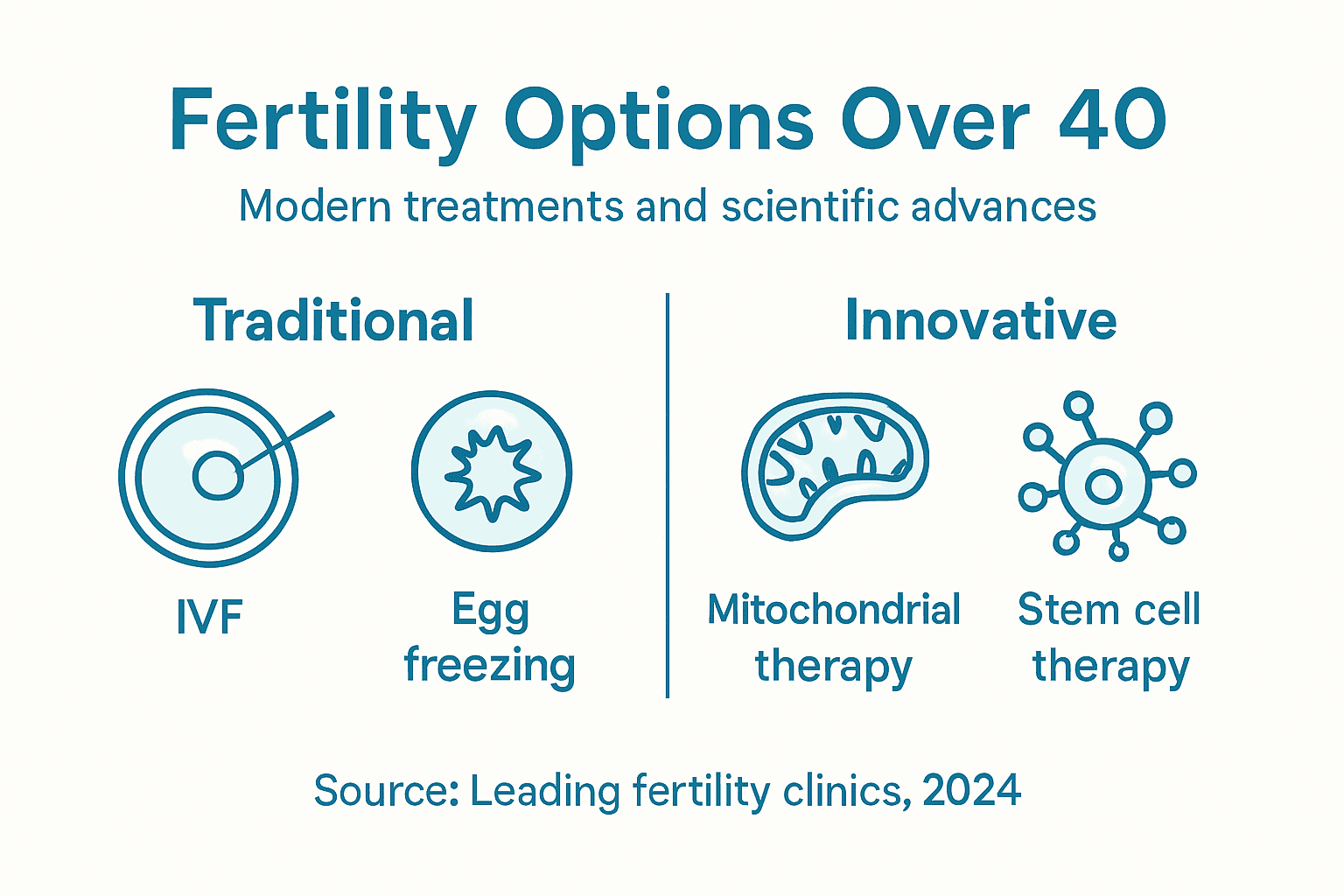
For women facing severely diminished ovarian reserve, treatment options extend beyond traditional IVF. Egg freezing allows you to preserve eggs at your current age for use later, giving you the biological advantage of younger eggs even if you attempt pregnancy years down the line. Mitochondrial replacement therapy (MRT) represents a frontier approach specifically designed for women whose eggs carry mitochondrial defects or whose mitochondrial function has declined. This procedure transfers nuclear DNA from your egg into a donor egg with healthy mitochondria, essentially replacing the cellular power plants that drive egg quality and embryo development. Stem cell therapy for ovarian rejuvenation takes a different approach entirely, using autologous stem cells to stimulate the ovary’s regenerative capacity, potentially improving egg quality and quantity for women with poor ovarian reserve. Platelet-rich plasma (PRP) ovarian injections harness growth factors from your own blood to potentially activate dormant follicles and improve ovarian function. These options exist at the intersection of cutting-edge science and clinical reality, offering pathways that would have seemed purely experimental just years ago.
Additional innovations continue expanding the treatment landscape. Gamete and embryo cryopreservation preserves eggs, sperm, or embryos for future use, essential for family planning and fertility preservation. Simplified IVF protocols reduce medication burden and side effects while maintaining effectiveness, making treatment more accessible and tolerable. Advanced artificial intelligence systems now analyze embryo videos to predict implantation potential with increasing accuracy, helping clinicians select the embryos most likely to result in successful pregnancies. The key insight for women over 40 is that these options are not mutually exclusive. A comprehensive fertility evaluation might reveal that combining approaches serves you better than any single treatment. Someone with poor egg quality but reasonable quantity might benefit from combining egg freezing with stem cell therapy to maximize their options. Another woman might start with PRP ovarian rejuvenation before pursuing IVF, attempting to improve the baseline ovarian function first.
Understanding these treatments means grasping that fertility science now offers specificity where once only generalized protocols existed. You are not simply pursuing “fertility treatment.” You are selecting from a sophisticated menu of options, each addressing particular biological challenges, each carrying different success profiles depending on your age, ovarian reserve, egg quality, and other factors. The woman with diminished reserve but excellent egg quality faces different optimal treatment paths than the woman with better quantity but compromised quality. This is why thorough diagnostic evaluation before treatment selection matters so profoundly.
Here’s a side-by-side summary of key advanced fertility treatments for women over 40:
Treatment Type | Main Mechanism | Targeted Challenge | Typical Candidates |
IVF with PGT | Embryo screening for genetics | Chromosomal abnormalities | Women 40+, recurrent IVF failure |
Mitochondrial Replacement | Replace aging mitochondria | Mitochondrial dysfunction, egg quality decline | Women 40+ with poor egg quality |
Stem Cell Ovarian Rejuvenation | Regenerate ovarian tissue | Severely diminished ovarian reserve | Women 40+ with low reserve |
PRP Ovarian Injections | Activate dormant follicles | Poor ovarian response | Women 40+ seeking ovarian boost |
Egg Freezing | Preserve eggs at current age | Future fertility planning | Women late 30s to 40+ |
Pro tip: Request a detailed ovarian reserve assessment before committing to any treatment plan. This should include antral follicle count, follicle-stimulating hormone levels, and ideally assessment of mitochondrial function or egg quality markers, ensuring your chosen treatment directly addresses your specific reproductive challenge rather than following a default protocol.
How Mitochondrial Replacement Therapy Works
Mitochondrial Replacement Therapy represents a fundamental shift in how fertility science addresses egg quality decline in aging women. Rather than accepting that mitochondrial dysfunction inevitably accompanies aging, MRT directly replaces the source of the problem. To understand how this works, you need to grasp the central role mitochondria play in egg health. Mitochondria function as cellular power plants, generating the energy required for egg maturation, fertilization, and early embryo development. As women age, mitochondrial function deteriorates. The number of mitochondria within eggs declines, their ability to produce energy diminishes, and their structure becomes compromised. This mitochondrial aging directly contributes to egg quality decline and the increased miscarriage rates women over 40 experience. MRT addresses this not by attempting to repair aging mitochondria but by replacing them entirely with healthy mitochondria from a younger donor.
The actual procedure operates through one of two primary technical approaches. Spindle transfer, the most widely used method, removes the spindle apparatus containing your nuclear DNA from your egg and inserts it into a donor egg from which the spindle has been removed but whose mitochondria remain intact. Think of it this way: your egg contributes the genetic blueprint (nuclear DNA) that determines your child’s traits and health, while the donor egg contributes only its mitochondrial DNA, the genetic material residing within mitochondria that codes for energy production. The result is an embryo carrying nuclear DNA from both parents and mitochondrial DNA from the donor. Pronuclear transfer works similarly but operates at a slightly different stage, removing the pronuclei (the nuclear material) from both a fertilized egg and a donor egg, then combining the genetic material in the donor egg cytoplasm with healthy mitochondria. Precise transfer of nuclear material requires extraordinary technical skill because the slightest disruption can damage the delicate structures being manipulated.
What makes MRT particularly valuable for women over 40 is that it directly targets the mitochondrial component of egg aging while preserving your own genetic contribution entirely. You are not replacing the egg; you are replacing the energy-producing machinery within it. The donor contributes only mitochondrial DNA, which accounts for less than 1 percent of your child’s total DNA and carries no traits or characteristics beyond energy production capacity. Your child’s appearance, personality, intelligence, and all heritable traits derive entirely from nuclear DNA, which comes from you and your partner. This distinction matters because it means MRT does not create an egg that is genetically “someone else’s.” It creates your egg, with your genetics intact, simply equipped with functional mitochondria. For women whose eggs have been compromised by mitochondrial aging but who carry no genetic diseases, MRT essentially restores what natural aging has taken away.
The procedure begins with ovarian stimulation to retrieve eggs, identical to standard IVF. Once eggs are retrieved, the nuclear transfer occurs under an advanced microscope using micromanipulation equipment. The entire spindle transfer process takes approximately 15 to 20 minutes per egg. Following transfer, the reconstructed egg is cultured overnight to assess whether it has survived the procedure and initiated the process of preparing for fertilization. The next day, fertilization occurs through standard IVF or ICSI, depending on your specific situation. The resulting embryos develop normally in culture, and viable embryos undergo transfer or freezing just as in conventional IVF. From a patient perspective, the experience resembles standard IVF: hormone injections, egg retrieval, fertilization, embryo development, and transfer. The technical complexity happens behind the scenes in the embryology laboratory.
One critical consideration involves mitochondrial-nuclear compatibility, the degree to which your nuclear DNA functions optimally with the donor’s mitochondrial DNA. Your mitochondria and nuclear genes have co-evolved over generations to work together. Introducing mitochondria from a genetically unrelated donor introduces a slight mismatch that researchers continue studying. Current evidence suggests this mismatch does not cause significant problems, but long-term follow-up studies on children born through MRT remain ongoing. Additionally, the ethical dimension of using a third-party genetic contributor, even though that contribution is limited to mitochondrial DNA, requires careful consideration. Some women feel entirely comfortable with this genetic contribution; others find it ethically complicated. Clinic counselors should explore these feelings with you before proceeding.
Pro tip: Before pursuing MRT, request a mitochondrial function assessment to confirm mitochondrial dysfunction is actually contributing to your egg quality issues rather than assuming this is your primary problem. Some women’s egg quality decline stems from chromosomal issues or other factors where MRT would not help, making this diagnostic step essential for treatment selection.
Stem Cell Therapy for Ovarian Rejuvenation
Stem cell therapy for ovarian rejuvenation represents an entirely different approach to addressing diminished ovarian reserve than mitochondrial replacement therapy. Rather than replacing defective components within existing eggs, stem cell therapy attempts to restore the ovary’s fundamental capacity to produce healthy eggs. This distinction matters profoundly. You are not working with individual eggs; you are trying to regenerate the ovarian tissue itself, activating dormant follicles, and stimulating the ovary to function as it did when you were younger. For women over 40 facing severely diminished ovarian reserve, this approach offers a potential pathway that conventional IVF alone cannot provide: the possibility of actually improving your ovarian function rather than simply working with whatever reserve remains.
The science underlying stem cell therapy for fertility centers on mesenchymal stem cells (MSCs), a type of stem cell that possesses regenerative properties extending far beyond simple cell replacement. Mesenchymal stem cells possess regenerative properties that may protect or repair ovarian tissue, modulate immune responses, and improve hormonal balance. When MSCs are introduced into the ovary, they do not simply transform into egg-producing cells. Instead, they work through multiple mechanisms simultaneously. They reduce inflammation within ovarian tissue, which typically increases with aging and contributes to follicle dysfunction. They stimulate blood vessel formation, improving oxygen and nutrient delivery to developing follicles. They promote the release of growth factors that activate dormant follicles, potentially awakening eggs that have been present but inactive within your ovarian reserve. They modulate the immune environment, reducing autoimmune attack on ovarian tissue. For women whose ovaries have essentially shut down due to premature ovarian insufficiency or severe age-related decline, MSC therapy attempts to restart function at a fundamental level.
The clinical application involves harvesting stem cells from bone marrow or adipose tissue (fat), expanding them in the laboratory to increase their numbers, and then injecting them directly into the ovary under ultrasound guidance. Autologous stem cell ovarian transplantation (ASCOT) uses your own stem cells, eliminating rejection concerns and maintaining ethical simplicity. The procedure itself is minimally invasive compared to surgical ovarian interventions. Once injected, the stem cells begin secreting factors that reshape the ovarian microenvironment. The timeline for observing results varies. Some women report improvements in hormone levels within weeks. Others require several months for follicle activation to become clinically apparent through improved antral follicle counts or hormone patterns. Early clinical evidence shows encouraging results. Women receiving MSC therapy have demonstrated improved ovarian function, better hormone profiles, and in some cases, improved egg quality metrics. However, comprehensive long-term clinical evidence remains limited compared to established treatments like IVF, which means stem cell therapy occupies an intermediate position: more than experimental, but not yet standard of care with extensive outcome data.
What makes stem cell therapy particularly valuable for women over 40 is its potential to work synergistically with other treatments. You might pursue stem cell therapy to improve your baseline ovarian function, then follow with IVF once improved hormone levels and follicle counts suggest your ovaries have responded. Alternatively, you might combine stem cell therapy with platelet-rich plasma (PRP) ovarian injections, which use growth factors from your own blood to stimulate ovarian function through a different mechanism. Some women benefit from combining multiple rejuvenation approaches simultaneously, essentially flooding the ovary with multiple regenerative signals rather than relying on a single intervention. The research investigating these combination approaches continues to expand.
One critical reality requires honest acknowledgment: stem cell therapy does not work for everyone, and the degree of response varies considerably. Some women experience dramatic improvements in ovarian function. Others see modest changes. Still others show minimal response. Age, baseline ovarian reserve, overall health, and individual biological factors all influence outcomes. Additionally, the long-term safety profile continues being established. While mesenchymal stem cells carry a strong safety record in other medical applications, their specific use in ovarian rejuvenation represents a newer application. Clinics offering this treatment should provide honest assessments of success rates for your specific situation rather than implying universal effectiveness.
Pro tip: Before committing to stem cell therapy, request documentation of the clinic’s specific outcomes with your demographic profile: your age, ovarian reserve level, and diagnosis. Success rates vary dramatically depending on baseline ovarian function, and a clinic with excellent results in younger women with moderate reserve may have different outcomes for women over 45 with severely diminished reserve.
Risks, Ethics, and Legal Regulations Globally
Advanced fertility treatments like mitochondrial replacement therapy and stem cell therapy exist at the frontier of reproductive medicine, which means they operate in a complex landscape of evolving regulations, unresolved ethical questions, and genuine medical risks. Understanding these dimensions is not optional for women considering these treatments. You need clarity about what safety data actually exists, what ethical implications matter to your specific situation, and crucially, what legal protections or restrictions apply depending on where you pursue treatment. The stark reality is that regulatory environments vary dramatically worldwide. A procedure legal and regulated in one country may be prohibited in another. A treatment considered standard of care in some jurisdictions exists in legal gray zones elsewhere. This patchwork creates both opportunity and vulnerability for international patients seeking advanced fertility options.
Medical Risks and Safety Profiles
Mitochondrial replacement therapy carries specific risks that warrant honest discussion. The nuclear transfer procedure itself can damage the delicate structures being manipulated, resulting in eggs that fail to fertilize or develop normally. Success rates for spindle transfer typically range from 60 to 80 percent for surviving eggs, meaning roughly one in five eggs may not survive the procedure. Long-term safety data on children born through MRT remains limited. While early cohorts show normal development, the oldest MRT-conceived children are currently in their early teenage years. Potential long-term risks include mitochondrial-nuclear incompatibility effects that might manifest only years later, though current evidence suggests this risk is low. Stem cell therapy for ovarian rejuvenation carries different risk categories. Stem cell injection itself is minimally invasive, but ovarian injection carries standard procedural risks including infection, bleeding, and potential damage to ovarian tissue. More concerning is incomplete safety understanding. Mesenchymal stem cells possess immunomodulatory properties, and introducing large numbers into the ovary could theoretically trigger abnormal immune responses. Long-term effects on egg quality remain incompletely characterized. Neither treatment has extensive prospective safety data spanning decades.
Ethical Dimensions and Informed Consent
The ethical complexity of these treatments extends beyond medical safety. Ethical, legal, and social implications of fertility preservation involve patient autonomy, informed consent, and equitable access to treatment, requiring careful navigation of competing values. Mitochondrial replacement therapy introduces a third genetic contributor to your child, even though that contribution is limited to mitochondrial DNA. Some women feel entirely comfortable with this arrangement. Others experience genuine ethical discomfort about genetic material from an unknown donor influencing their child. Clinics should facilitate deep reflection on this aspect rather than dismissing it as medically irrelevant. The question of what informed consent genuinely means when long-term data is limited creates another ethical layer. Can you truly consent to a procedure whose long-term effects remain unknown? Clinics may argue that existing data supports safety, but honesty requires acknowledging that long-term effects simply cannot be known with certainty. Stem cell therapy raises questions about expectations versus reality. Early clinical evidence is encouraging but limited. Women facing poor ovarian reserve may desperately want stem cell therapy to work, potentially clouding their judgment about realistic success probabilities. Ethical practice requires clinicians to acknowledge both hope and honest uncertainty simultaneously.
Global Regulatory Landscape
The legal terrain varies so dramatically across countries that treatment options available to you depend entirely on geography. The United Kingdom permits mitochondrial replacement therapy under strict regulatory oversight through the Human Fertilisation and Embryology Authority, making it one of the few jurisdictions with established legal frameworks for this procedure. The United States has not approved MRT, though research is ongoing. The European Union’s regulatory approach varies by member state, with some permitting research but not clinical use. Many countries prohibit MRT entirely. Stem cell therapy for ovarian rejuvenation occupies even murkier legal territory. Most countries have not explicitly approved it as standard fertility treatment, placing clinics in regulatory gray zones where the procedure occurs but lacks official endorsement. Regulatory frameworks for fertility treatments differ significantly among countries, affecting accessibility, types of allowed procedures, and funding, creating a patchwork where your access depends on location and resources. This regulatory disparity creates medical tourism patterns where women travel internationally to access treatments unavailable domestically. While international travel for treatment is legally permissible in most cases, it removes you from the regulatory oversight that exists in your home country. A clinic in a jurisdiction with minimal regulatory requirements may offer procedures with less rigorous safety standards than clinics in heavily regulated environments.
Quality Assurance and Clinic Credibility
In this complex landscape, your primary protection lies in selecting clinics with established credibility, transparent outcome reporting, and rigorous quality assurance. Clinics offering frontier treatments should provide documentation of their specific success rates, complication rates, and long-term follow-up data for your specific treatment and demographic. They should belong to professional organizations with ethical guidelines. They should provide written informed consent materials that honestly acknowledge both data supporting the procedure and limitations in our knowledge. They should offer independent counseling to help you explore ethical considerations. Avoid clinics that oversell results, imply universal effectiveness, or dismiss your ethical concerns as irrelevant.
Pro tip: Before pursuing any advanced fertility treatment internationally, consult with a reproductive endocrinologist in your home country about the treatment’s legal status there and any implications for follow-up care or complications. Some complications from frontier treatments may be difficult for your local healthcare system to address if they lack familiarity with the procedure.
Comparing Innovative Approaches to Traditional Options
When women over 40 face infertility, the choice is no longer binary between accepting childlessness or pursuing conventional IVF. Today’s fertility landscape offers a spectrum of options ranging from time-tested traditional approaches to frontier treatments that barely existed five years ago. Understanding how these options complement or compete with each other matters profoundly for your decision-making. Traditional fertility treatments have genuine strengths. In vitro fertilization works. Success rates for women under 40 with normal ovarian reserve exceed 50 percent per cycle. Ovarian stimulation protocols have been refined over decades, with complications well-understood and manageable. These treatments carry established safety profiles backed by millions of cycles and decades of follow-up data. They remain accessible in most developed countries with regulatory oversight ensuring quality. For women over 40 with adequate ovarian reserve, standard IVF often succeeds, making it the logical starting point. The limitation emerges precisely where you likely find yourself: when diminished ovarian reserve, poor egg quality, or repeated IVF failures suggest that conventional approaches alone may not deliver pregnancy.
This is where innovative approaches shine. Innovative approaches such as mitochondrial replacement, stem cell therapy, and AI-driven embryo selection offer improved outcomes, particularly for women over 40 with complex infertility. Mitochondrial replacement directly addresses the mitochondrial component of egg aging, something traditional IVF cannot touch. Stem cell therapy attempts ovarian rejuvenation rather than simply working with existing ovarian reserve. Artificial intelligence embryo assessment provides selection criteria beyond what human embryologists can discern through microscopy alone. These innovations target specific biological problems that traditional protocols cannot solve. A woman whose eggs have normal chromosome count but poor mitochondrial function might fail repeated IVF cycles, then succeed with MRT. Another woman with severely diminished reserve might show no response to maximal hormone stimulation, then mobilize dormant follicles through stem cell therapy. The key insight is that these approaches are not mutually exclusive replacements for traditional treatment. They are complementary options addressing different problems.
Compare traditional versus innovative fertility approaches on crucial factors:
Factor | Traditional IVF | Innovative Approaches |
Research Base | Decades, well validated | Limited, emerging data |
Cost | High, sometimes insured | Much higher, rarely covered |
Success for 40+ | Drops with age | Potential for improvement |
Geographic Access | Widely available | Restricted by country |
Long-term Safety | Extensive follow-up data | Limited long-term evidence |
The practical comparison depends entirely on your specific situation. Start with diagnostic clarity. Comprehensive testing should reveal whether your egg quality decline stems primarily from chromosomal issues, mitochondrial dysfunction, or other factors. If chromosomal abnormalities predominate, enhanced embryo screening through preimplantation genetic testing improves outcomes with conventional IVF. If mitochondrial dysfunction is confirmed, MRT specifically addresses this. If ovarian reserve is severely diminished but mitochondrial function remains reasonable, stem cell therapy might precede IVF. The path forward depends on understanding which biological systems have failed. Women sometimes pursue expensive innovative treatments when standard approaches would succeed. Others exhaust conventional options when earlier innovation might have provided answers. This is why working with clinics that maintain expertise across the full spectrum proves valuable. A clinic offering only traditional IVF cannot appropriately recommend emerging therapies. A clinic offering only frontier treatments may push expensive options when simpler approaches would work.
Cost and Accessibility Considerations
Innovative treatments typically cost significantly more than standard IVF. MRT cycles generally cost 30 to 50 percent more than conventional IVF. Stem cell therapy adds thousands in additional costs. Insurance typically does not cover either treatment in most countries. This cost barrier creates genuine inequity. Women with financial resources access options unavailable to those without. International medical tourism patterns emerge partly because advanced treatments in certain countries cost less than in others, yet travel expenses and time away offset some savings. Traditional IVF, while still expensive, benefits from economies of scale and insurance coverage in some cases. Low-cost IVF protocols, simplified stimulation approaches, and shared egg programs provide alternatives for women unable to afford standard IVF, let alone innovative add-ons. The future of fertility care likely involves both approaches. Traditional IVF will continue serving women who respond well to conventional stimulation. Innovative approaches will address specific problems where traditional methods have failed. Integration of innovative approaches seeks to improve success rates, reduce treatment burdens, and address infertility causes previously untreatable with conventional options, potentially transforming fertility care delivery. Rather than viewing this as traditional versus innovative, the most sophisticated approach combines diagnostic precision with treatment selection that matches your specific biological challenges.
Decision-Making Framework
Consider this framework when comparing options. First, pursue diagnostic testing that identifies your specific infertility cause. Second, start with the simplest effective treatment addressing that cause. Third, move to more complex approaches only if simpler ones fail. A woman with poor egg quality, adequate reserve, and no other issues might begin with enhanced embryo screening through PGT. If chromosomal abnormalities explain failures, this addresses the problem. If egg quality decline continues despite chromosomal normality, MRT becomes rational. A woman with severely diminished reserve might start with stem cell therapy to improve baseline reserve before pursuing IVF, maximizing available eggs. Another might combine multiple rejuvenation approaches simultaneously. The point is that treatment selection should follow diagnostic understanding rather than defaulting to either traditional or innovative extremes.
Pro tip: Request your fertility clinic create a detailed comparison of outcomes for your specific diagnosis and age using their data for both traditional IVF and any innovative approaches they offer. Real outcomes from their patient population matter far more than general success rates, and any clinic reluctant to provide this comparison warrants skepticism about their treatment recommendations.
Unlock New Fertility Possibilities After 40 with Advanced Science
Women over 40 face unique challenges like declining egg quality and diminished ovarian reserve, issues explored deeply in “Fertility Science: Transforming Options for Women Over 40.” If you are confronting mitochondrial dysfunction or poor ovarian response, traditional treatments might feel limiting and frustrating. Understanding options such as Mitochondrial Replacement Therapy and Stem Cell Ovarian Rejuvenation can bring hope and concrete steps toward overcoming these barriers. At Rejuvenating Fertility Center, we specialize in precisely these advanced therapies, blending cutting-edge science with personalized care tailored to your reproductive profile.
Take control today and discover fertility treatments designed for your specific biological challenges. Whether you want to explore mitochondrial replacement, stem cell therapy, or enhance your IVF journey, our expert team led by Dr. Zaher Merhi supports your path to success. Visit Rejuvenating Fertility Center to schedule a consultation and access the most innovative fertility solutions available internationally. Learn more about how groundbreaking treatments can transform your fertility experience by visiting our site now.
Frequently Asked Questions
What is fertility science and how does it help women over 40?
Fertility science combines reproductive biology, clinical expertise, and laboratory innovation to address infertility, offering targeted solutions for women over 40. It includes advanced diagnostic tools and treatments that improve egg quality and increase the chances of successful pregnancies.
What are the most advanced fertility treatments available for women over 40?
Advanced treatments include in vitro fertilization (IVF), intracytoplasmic sperm injection (ICSI), mitochondrial replacement therapy (MRT), stem cell therapy for ovarian rejuvenation, and platelet-rich plasma (PRP) ovarian injections. These treatments address specific challenges associated with aging and infertility.
How does mitochondrial replacement therapy (MRT) work?
Mitochondrial replacement therapy (MRT) works by replacing defective mitochondria in a woman’s eggs with healthy mitochondria from a donor egg. This procedure aims to improve egg quality and embryo development by enhancing the cellular energy production essential for reproduction.
What is the role of stem cell therapy in ovarian rejuvenation for women over 40?
Stem cell therapy for ovarian rejuvenation introduces mesenchymal stem cells into the ovary to restore its ability to produce healthy eggs. This therapy targets the underlying issues of diminished ovarian reserve rather than simply working with existing eggs, potentially improving reproductive outcomes.
Recommended
Comments