
Why Travel for Fertility Treatments Matters Now

Finding hope after forty often means looking beyond familiar borders when fertility options feel limited at home. For women with diminished ovarian reserve, restrictive laws and outdated treatments can block the path to motherhood. By seeking innovative therapies like MRT and stem cell treatment at advanced global clinics, you open the door to broader possibilities and benefit from the expertise of leading reproductive specialists who understand the unique needs of international patients.
Table of Contents
Key Takeaways
Point | Details |
Fertility Tourism | Individuals often travel internationally for advanced fertility treatments due to cost, technology access, and legal considerations. |
Advanced Treatments | Patients seek innovative technologies abroad, including Preimplantation Genetic Testing and mitochondrial replacement therapy, which may not be available in their home countries. |
Legal and Ethical Variations | Different countries have varying regulations around fertility treatments, making it essential for patients to understand the legal context before proceeding. |
Cost Comparisons | Costs for fertility treatments can vary significantly; for instance, treatments in countries like Spain and the Czech Republic may be much more affordable than in the United States. |
What Is Traveling for Fertility Treatments?
Traveling for fertility treatments, also known as fertility tourism, represents a strategic approach for individuals seeking advanced reproductive care beyond their home country’s limitations. Cross-border reproductive care emerges from complex global medical landscapes where patients pursue specialized fertility solutions internationally.
The core motivations behind fertility tourism are multifaceted and deeply personal. Patients often choose international treatment pathways due to several critical factors:
Cost disparities between countries
Access to advanced medical technologies
Less restrictive legal environments
Higher quality specialized care
Privacy and confidentiality considerations
Shortened waiting periods for procedures
Fertility tourism typically involves traveling to countries with advanced reproductive medicine infrastructures, such as Spain, Greece, the Czech Republic, and increasingly, innovative destinations like the Bahamas. Medical travelers seek comprehensive treatment packages that offer cutting-edge technologies, experienced specialists, and potentially more affordable options compared to their home healthcare systems.
Internationally, patients navigate complex decisions involving medical expertise, legal frameworks, and personal reproductive goals. Reproductive care across borders requires careful research, understanding of international medical standards, and strategic planning to ensure successful outcomes.
Pro tip: Always verify a clinic’s international credentials, success rates, and patient testimonials before committing to cross-border fertility treatments.
Advanced Treatments Unavailable at Home
International fertility travelers increasingly seek advanced reproductive technologies unavailable in their home countries. These cutting-edge treatments represent hope for patients facing complex reproductive challenges that traditional medical systems cannot adequately address.
The most sought-after advanced treatments include:
Preimplantation genetic testing (PGT)
Mitochondrial replacement therapy
Advanced embryo selection techniques
Specialized genetic screening
Innovative egg freezing methods
Comprehensive chromosomal assessment
Patients pursuing international fertility care often face significant limitations in their home healthcare systems. Legal restrictions and technological gaps create barriers that drive medical travelers to seek more progressive reproductive medicine environments. Countries with advanced regulatory frameworks and substantial investments in reproductive science become attractive destinations for patients seeking comprehensive fertility solutions.

These advanced treatments offer transformative possibilities for individuals experiencing complex fertility challenges. Reproductive technologies abroad provide opportunities for genetic screening, donor treatments, and specialized procedures that can dramatically improve reproductive outcomes and expand family-building options.
Pro tip: Research clinics thoroughly, verifying their international certifications, success rates, and specialized treatment protocols before committing to cross-border fertility care.
Legal and Ethical Differences Worldwide
Cross-border reproductive care regulations reveal a complex global landscape of legal and ethical variations that profoundly impact fertility treatment options. Different countries maintain drastically different approaches to reproductive rights, creating significant challenges for patients seeking comprehensive fertility solutions.
Key legal variations across global jurisdictions include:
Age restrictions for fertility treatments
Eligibility criteria based on:
Marital status
Sexual orientation
Relationship configuration
Prohibitions on specific procedures
Surrogacy
Donor gamete usage
Genetic screening
Consent and welfare regulations
Some nations implement strict legal frameworks that limit reproductive choices, compelling patients to seek alternative fertility treatment destinations. Countries like Spain, the Czech Republic, and emerging medical tourism destinations offer more progressive legal environments that accommodate diverse patient needs and family-building strategies.
Ethical considerations extend beyond legal frameworks, encompassing complex issues of consent, potential exploitation, and the broader implications of reproductive technologies. Patients must carefully navigate these nuanced landscapes, understanding that legal permissions do not automatically resolve the deeper ethical questions surrounding advanced fertility interventions.
Pro tip: Consult international reproductive law specialists to fully understand the legal and ethical implications of cross-border fertility treatments before making any decisions.
Comparing Costs and Success Rates Abroad
International fertility treatment costs reveal a complex landscape of pricing and performance that drives medical travelers to seek alternatives beyond their home countries. Patients increasingly recognize that geographical boundaries can significantly impact both financial investment and reproductive outcomes.
Key comparative factors include:
Treatment cycle costs
United States: $15,000 - $30,000 per cycle
Spain: $5,000 - $8,000 per cycle
Czech Republic: $3,500 - $6,500 per cycle
Success rate variations:
Average US success rates: 30-35%
Top international clinics: 40-50%
Additional cost considerations:
Travel expenses
Accommodation
Medical consultations
Follow-up care
Some international destinations offer remarkable cost-effectiveness in fertility treatments, with potential savings up to 80% compared to domestic prices. Countries like Spain, Greece, and the Czech Republic have emerged as leading destinations, combining competitive pricing with advanced reproductive technologies and experienced medical professionals.
Patients must conduct comprehensive research, evaluating not just headline prices but holistic treatment packages, clinic reputation, success rates, and potential additional expenses. The most economical option is not always the cheapest upfront, but the one offering the highest probability of successful conception.
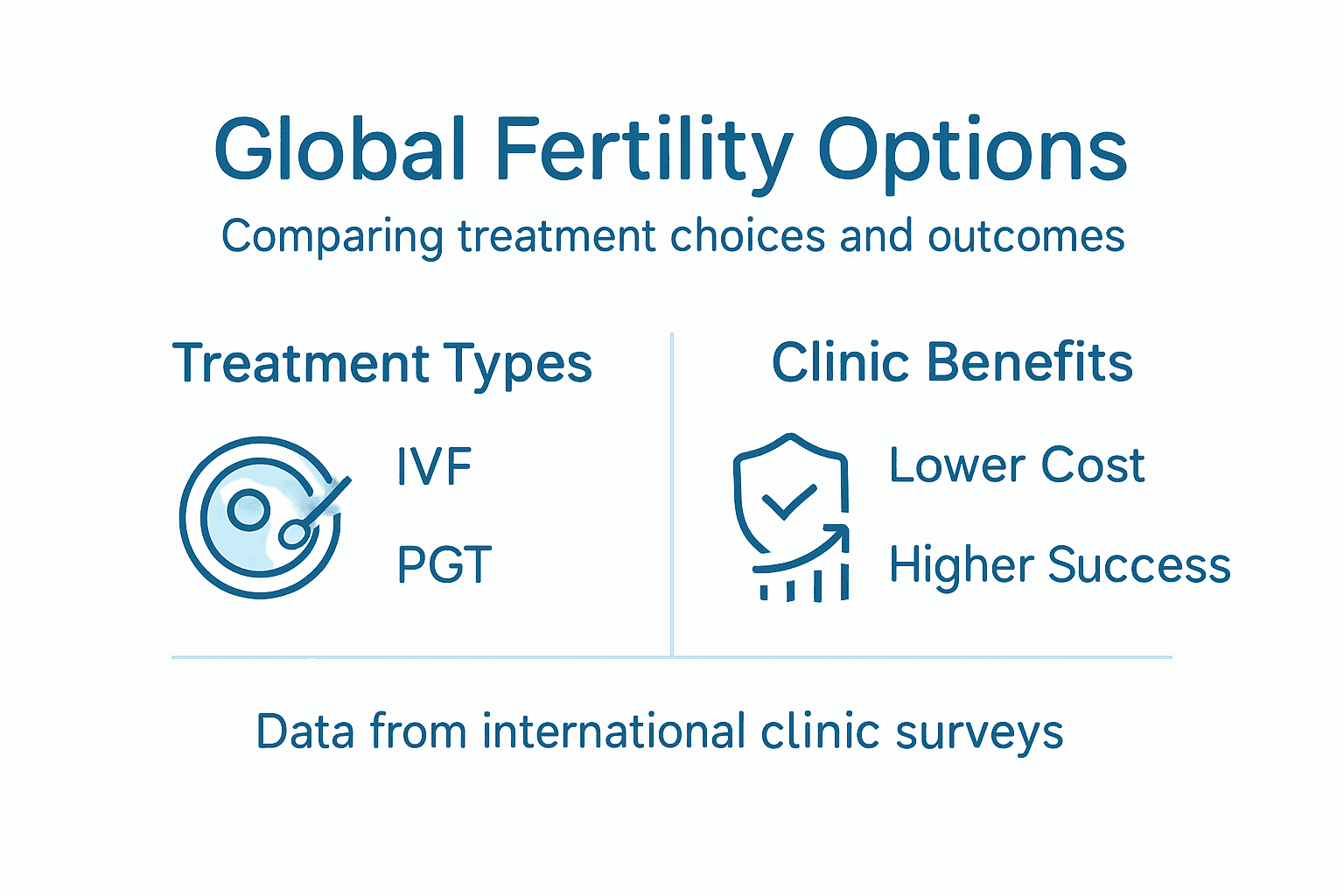
Here’s how leading fertility treatment destinations compare on key aspects:
Country | Typical Cycle Cost | Legal Environment | Average Success Rate |
United States | $15,000 - $30,000 | Restrictive on some procedures | 30-35% |
Spain | $5,000 - $8,000 | More permissive, progressive rules | 40-50% |
Czech Republic | $3,500 - $6,500 | Progressive, diverse eligibility | 40-50% |
Greece | $6,000 - $8,000 | Flexible regulations, wide access | 40-48% |
Pro tip: Request detailed cost breakdowns and success rate documentation from multiple international clinics before making your final treatment destination decision.
Risks, Safety, and Common Challenges
Fertility treatment travel risks represent a complex landscape of potential medical, legal, and logistical challenges that patients must carefully navigate. Understanding these risks is crucial for making informed decisions about cross-border reproductive care.
Key risks and challenges include:
Medical communication barriers
Language differences
Incomplete medical record transfers
Varying clinical standards
Legal complexities
Parental rights uncertainty
Citizenship documentation
Cross-border legal variations
Logistical considerations
Multiple international trips
Treatment synchronization
Travel health insurance
Coordinating international fertility care requires meticulous planning and comprehensive research. Patients must thoroughly evaluate clinic credentials, understand potential regulatory differences, and develop robust communication strategies with international healthcare providers.
Emotional preparedness is equally critical when considering fertility treatments abroad. The combination of medical uncertainty, travel stress, and financial investment can create significant psychological challenges. Patients should prioritize mental health support and develop realistic expectations about potential treatment outcomes.
Key international fertility treatment challenges and helpful patient strategies:
Challenge | Potential Impact | Patient Strategy |
Communication barriers | Misunderstanding risks | Use translators and clear records |
Legal uncertainty | Citizenship complications | Consult legal specialists |
Logistics and travel | Increased stress and costs | Plan multiple visits carefully |
Emotional demands | Psychological difficulty | Seek counseling and support |
Pro tip: Create a comprehensive medical documentation portfolio with translated medical records, comprehensive treatment history, and potential communication support resources before traveling for fertility treatments.
Discover Cutting-Edge Fertility Solutions Beyond Borders
If you are facing challenges such as poor ovarian reserve, genetic concerns, or limitations in accessing advanced fertility treatments in your home country the journey to parenthood can feel overwhelming. The article highlights the importance of seeking specialized treatments like mitochondrial replacement and stem cell therapies that are often unavailable or restricted elsewhere. At the Rejuvenating Fertility Center in the Bahamas, we specialize in pioneering these innovative reproductive technologies to empower you with new hope and options.
Take charge of your fertility journey with personalized care led by Dr. Zaher Merhi and a team dedicated to advanced science and compassionate support. Learn more about our revolutionary therapies including mitochondrial replacement therapy and innovative IVF techniques by visiting our website. Your path to parenthood deserves the best international expertise and breakthrough treatments now. Contact us today at Rejuvenating Fertility Center to explore how we can help transform your fertility journey.
Frequently Asked Questions
What are the main reasons for traveling for fertility treatments?
Traveling for fertility treatments allows patients to access advanced medical technologies, lower costs, less restrictive legal environments, higher quality care, and shorter waiting periods compared to their home countries.
What advanced fertility treatments might I find abroad that are not available at home?
Patients may find treatments like preimplantation genetic testing (PGT), mitochondrial replacement therapy, advanced embryo selection techniques, specialized genetic screening, and innovative egg freezing methods available in international clinics.
How do cost and success rates differ between international fertility clinics and those at home?
International fertility clinics often offer significant cost savings, with procedures averaging much lower than those in domestic clinics. Additionally, many top international clinics report higher success rates, often reaching between 40-50% compared to 30-35% in the US.
What are the risks associated with traveling for fertility treatments?
Risks include potential communication barriers, legal uncertainties regarding parental rights, logistical challenges related to treatment scheduling, and emotional stress. It’s important to conduct thorough research and be well-prepared before embarking on treatment abroad.
Recommended
Comments