
Fertility Preservation Guide: Secure Your Future Options

Facing fertility challenges after 35 is far more common than most American women realize, with over 40 percent experiencing diminished ovarian reserve during key reproductive years. This reality makes exploring advanced fertility therapies beyond the United States a vital step toward controlling your future. For those considering the Bahamas for fertility preservation, understanding every phase of the process empowers you to take confident action and discover effective, science-backed solutions tailored for your individual journey.
Table of Contents
Quick Summary
Key Takeaway | Explanation |
1. Assess Fertility Status Early | Early consultation with fertility experts helps in understanding reproductive potential and planning. |
2. Choose the Right Preservation Method | Select a fertility preservation method tailored to personal medical history and reproductive goals. |
3. Prepare for Advanced Treatments | Comprehensive preparation includes medical, emotional, and financial strategies for treatment success. |
4. Actively Monitor the Preservation Process | Regular monitoring ensures optimal outcomes during fertility preservation procedures. |
5. Establish a Long-Term Follow-Up Plan | A personalized follow-up plan helps maintain reproductive health and manage future fertility options. |
Step 1: Assess Fertility Status and Consult with Experts
Understanding your fertility status represents the critical first step in preserving your reproductive potential and making informed decisions about future family planning. A comprehensive fertility assessment provides crucial insights into your reproductive health, potential challenges, and potential treatment pathways.
Initiating your fertility evaluation requires a systematic approach that combines medical history review, physical examination, and specialized diagnostic testing. Comprehensive fertility assessment involves detailed evaluations for both female and male partners, focusing on identifying potential barriers to conception. Healthcare providers will typically conduct a thorough medical history review, examining factors such as age, previous pregnancies, menstrual cycle regularity, underlying health conditions, and potential genetic predispositions. Physical examinations and specialized imaging techniques like ultrasounds help evaluate reproductive organ health, while hormonal blood tests assess ovarian reserve and potential endocrine disruptions.
For women aged 35 and older, early consultation with fertility experts becomes increasingly important, as reproductive potential naturally declines with age. Seeking professional guidance allows you to develop personalized strategies for fertility preservation, understand potential treatment options, and make proactive decisions about your reproductive journey. Fertility specialists can provide comprehensive guidance, recommend advanced diagnostic tests, and help you develop a tailored approach that aligns with your unique reproductive goals.
Pro Tip: Schedule your initial fertility consultation during the first half of your menstrual cycle for the most accurate hormone level assessments and comprehensive diagnostic evaluation.
Step 2: Select the Most Suitable Preservation Method
Selecting the most appropriate fertility preservation method requires careful consideration of your individual medical history, reproductive goals, and current health status. Your choice will significantly impact future fertility potential and treatment success.
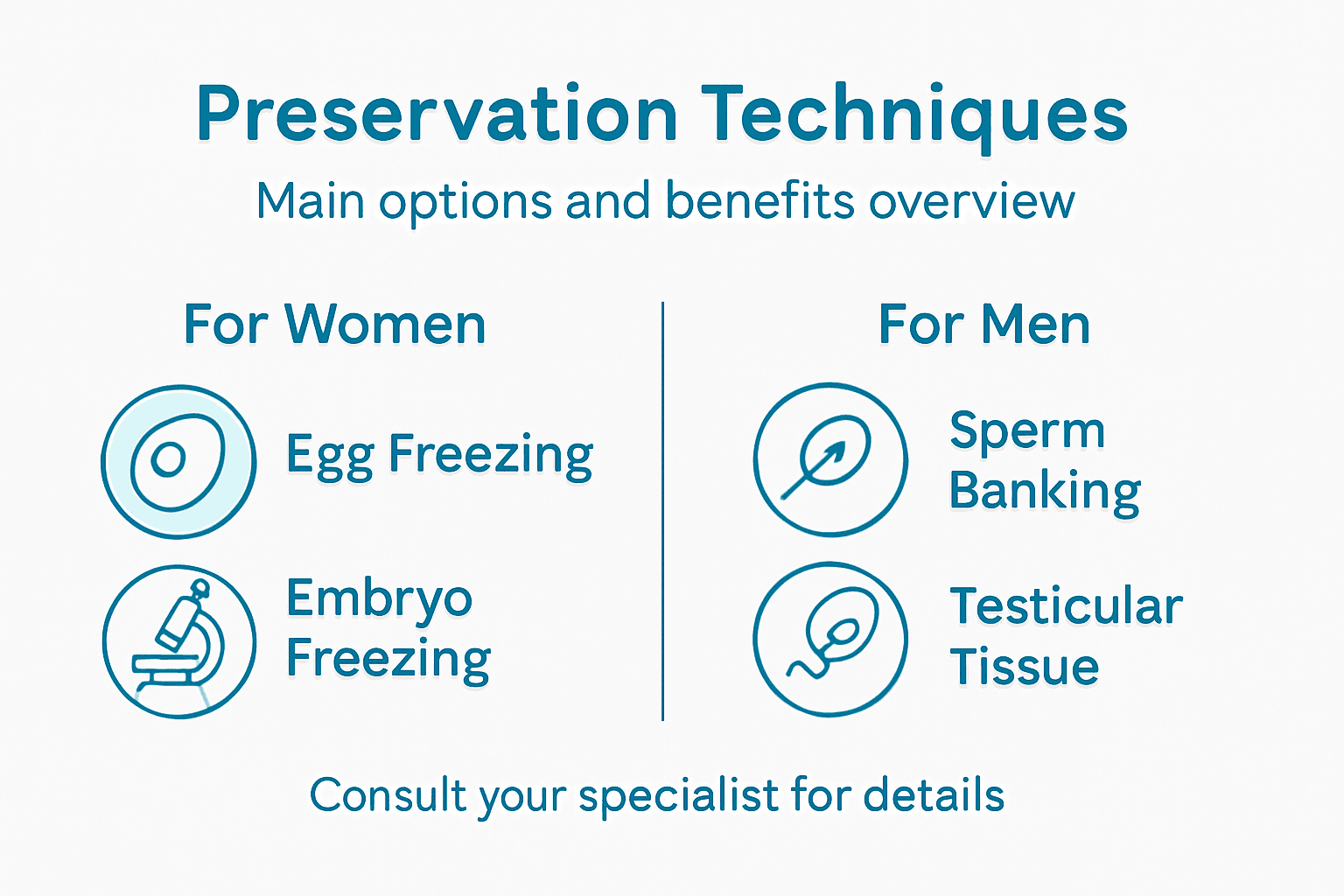
Fertility preservation techniques offer multiple options tailored to different circumstances and medical needs. The primary methods include egg freezing, embryo cryopreservation, and ovarian tissue preservation. Egg freezing remains an excellent choice for women who are not currently in a partnership or prefer to preserve their genetic material independently. This method involves hormonal stimulation, egg retrieval, and laboratory freezing of unfertilized eggs. Embryo cryopreservation, typically used by couples, involves creating embryos through IVF and freezing them for future use, offering slightly higher success rates due to fertilization prior to freezing.

Your fertility specialist will help you navigate these options by evaluating factors such as your age, underlying health conditions, reproductive goals, and potential medical treatments that might impact fertility. Some women facing medical treatments like chemotherapy might benefit from ovarian tissue preservation, a more advanced technique that involves surgically removing and freezing ovarian tissue for potential reimplantation. Understanding the nuanced differences between these methods allows you to make an informed decision that aligns with your personal reproductive timeline and medical circumstances.
Pro Tip: Consider consulting a reproductive endocrinologist who can provide comprehensive genetic screening alongside your preservation method to maximize future fertility potential.
Here’s a comparison of common fertility preservation methods and their typical candidates:
Method | Who It’s For | Key Benefits | Considerations |
Egg Freezing | Women preserving individual fertility | Allows single women future pregnancy options | Requires hormonal stimulation |
Embryo Cryopreservation | Couples planning future families | Slightly higher treatment success rates | Requires fertilization with partner’s sperm |
Ovarian Tissue Freezing | Women facing urgent medical treatments | Option for pre-pubertal or urgent cases | Still considered experimental in many regions |
Step 3: Prepare for Advanced Fertility Treatments
Preparing for advanced fertility treatments requires a comprehensive and strategic approach that addresses both physical and emotional aspects of your reproductive journey. Your preparation will set the foundation for maximizing treatment success and managing expectations throughout the process.
Advanced fertility treatment preparation involves a multifaceted strategy that encompasses medical evaluations, lifestyle modifications, and psychological readiness. Begin by scheduling comprehensive medical screenings that include detailed hormonal assessments, genetic testing, and a thorough review of your reproductive health history. Optimize your physical condition through targeted nutrition plans, appropriate exercise routines, and stress management techniques. This holistic approach helps create the most favorable physiological environment for potential fertility interventions.
Your preparation should also include emotional and psychological groundwork. Consulting with a fertility counselor can help you develop coping strategies, understand potential treatment outcomes, and build resilience throughout the process. Financial planning is equally important, as advanced fertility treatments can be complex and costly. Work closely with your healthcare team to understand potential treatment protocols, success rates, and explore insurance coverage or financing options. By approaching advanced fertility treatments with a comprehensive and proactive mindset, you maximize your potential for successful reproductive outcomes.
Pro Tip: Create a dedicated fertility treatment journal to track medical information, emotional experiences, and personal insights throughout your reproductive journey.
This summary table highlights essential preparation steps for advanced fertility treatments:
Preparation Area | Why It Matters | Example Actions |
Medical | Ensures optimal health | Comprehensive screenings, lab tests |
Emotional | Builds mental resilience | Counseling, support networks |
Lifestyle | Improves treatment outcomes | Nutrition, stress management |
Financial | Prevents unexpected expenses | Insurance review, budgeting |
Step 4: Undergo Preservation and Monitor Progress
Undertaking fertility preservation is a complex medical process that requires careful monitoring, precise medical interventions, and ongoing assessment of your reproductive potential. Your active participation and understanding of each stage will be crucial to achieving optimal outcomes.
Fertility preservation protocols involve a series of meticulously planned medical procedures designed to safeguard your reproductive cells. The process typically begins with comprehensive hormonal screening and ovarian stimulation, where fertility specialists will administer targeted medications to encourage optimal egg production. Regular ultrasound monitoring helps track follicular development, ensuring the precise timing for egg retrieval or tissue preservation. During this phase, your medical team will conduct frequent blood tests to assess hormone levels and adjust treatment protocols as needed, minimizing potential risks and maximizing the quality of preserved reproductive materials.
Beyond the physical procedures, emotional and psychological monitoring is equally important. Maintain open communication with your healthcare providers about any physical sensations, emotional changes, or concerns that arise during the preservation process. Documentation becomes critical tracking your progress, so consider maintaining a detailed health journal that records medical interventions, physical responses, and personal observations. This comprehensive approach ensures a holistic monitoring strategy that addresses both your medical and emotional well being throughout the fertility preservation journey.
Pro Tip: Request digital copies of all your medical imaging and test results to create a comprehensive personal health record for future reference.
Step 5: Verify Results and Plan Long-Term Follow-Up
Verifying your fertility preservation results and establishing a comprehensive long-term follow-up plan is crucial for maintaining your reproductive health and future fertility potential. This final stage ensures that your preserved reproductive materials remain viable and you stay informed about your ongoing reproductive capabilities.
Post-preservation evaluation strategies involve a multifaceted approach to assessing the quality and viability of your preserved eggs or tissues. Your medical team will conduct detailed hormonal assessments, advanced imaging studies, and specialized laboratory tests to confirm the integrity of your preserved reproductive materials. These evaluations will help determine the potential success rates for future fertility treatments and identify any necessary adjustments to your long-term reproductive health strategy. Regular consultations with your fertility specialist will allow for continuous monitoring of your ovarian reserve, hormonal balance, and overall reproductive health.
Developing a personalized long-term follow-up plan is essential for maintaining your reproductive options and overall well-being. This plan should include scheduled medical evaluations, potential additional preservation interventions, and a clear roadmap for when and how you might utilize your preserved reproductive materials. Consider working with a multidisciplinary team that includes reproductive endocrinologists, genetic counselors, and mental health professionals to create a holistic approach to your reproductive journey. Your plan should remain flexible, adapting to changes in your personal circumstances, medical advancements, and reproductive goals.
Pro Tip: Create a dedicated digital folder to store all your fertility preservation documents, test results, and medical records for easy access and future reference.
Secure Your Fertility Future with Advanced Care at Rejuvenating Fertility Center
Facing uncertainty about fertility preservation can feel overwhelming. The detailed steps in this guide highlight how essential it is to assess your fertility status, select the right preservation method, and prepare for advanced treatments with ongoing monitoring and follow-up. You want the best chance to protect your reproductive health and future family dreams. At Rejuvenating Fertility Center in The Bahamas, we understand these deeply personal challenges and offer cutting-edge solutions like Mitochondrial Replacement Therapy and Stem Cell Therapy designed to enhance egg quality and improve outcomes especially for women with poor ovarian reserve or genetic concerns.
Take control of your fertility journey today by working with a trusted leader in fertility innovation, Dr. Zaher Merhi. Explore personalized treatment plans and next-generation options at Rejuvenating Fertility Center. Visit our site now to schedule a consultation and secure your future with confidence. Learn more about our advanced therapies including IVF and Egg Freezing that align with your unique needs and goals.
Frequently Asked Questions
What steps should I take to assess my fertility status for preservation?
Understanding your fertility status begins with a comprehensive assessment that includes reviewing your medical history, undergoing physical examinations, and specialized diagnostic tests. Schedule an appointment with a fertility specialist to start this process and ensure all aspects of your reproductive health are evaluated.
How do I choose the right fertility preservation method for my situation?
Selecting a suitable fertility preservation method involves evaluating your medical history, reproductive goals, and current health status. Consult with a fertility specialist to discuss options like egg freezing or embryo cryopreservation, and tailor your choice to meet your individual circumstances.
What should I do to prepare for advanced fertility treatments?
Preparing for advanced fertility treatments involves a combination of medical evaluations, lifestyle changes, and emotional readiness. Create a plan that includes comprehensive medical screenings and consult with a fertility counselor to develop coping strategies and manage expectations.
How can I monitor my progress during fertility preservation?
Monitoring your progress during fertility preservation requires regular communication with your healthcare team and documentation of medical interventions. Keep a detailed health journal to track your treatments and any physical or emotional changes, ensuring you stay engaged in your reproductive journey.
What follow-up steps should I take after undergoing fertility preservation?
After fertility preservation, it is essential to verify the quality of your preserved materials and establish a long-term follow-up plan. Schedule regular consultations with your fertility specialist to monitor your reproductive health and adjust your plans as necessary based on your evolving circumstances.
Recommended
Comments